
Comparative Morphologies 17
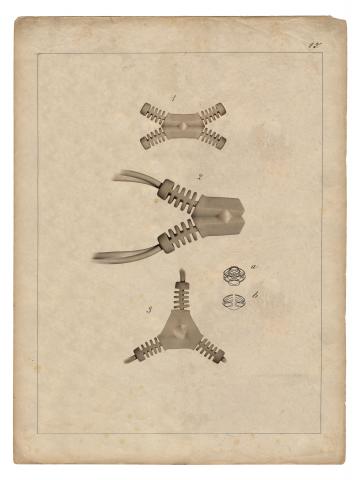
Comparative Morphologies 17, 2001
What looks like vintage natural history studies turns out to be, on closer inspection, images of computer and technological cords and peripherals, each slightly manipulated to take on organic characteristics--a fused or sprouting growth from a stem, a viral infection, or a radial symmetry. Syjuco used a digital camera to photograph the computer cords and peripherals that surrounded my home workstation, and then transferred them to the computer where the artist digitally altered and added to the original images. Arranged suggestively on an image of a vintage print (the original botanical images on it having been erased), the techie beginnings become transformed into the final archival-quality iris prints.
Stephanie Syjuco creates large-scale spectacles of collected cultural objects, cumulative archives, and temporary vending installations, often with an active public component that invites viewers to directly participate as producers or distributors. Her projects leverage open-source systems, shareware logic, and flows of capital, in order to investigate issues of economies and empire. In 2011, Syjuco developed a project for the San Francisco Museum of Modern Art titled "Shadowshop," a temporary vending installation and makeshift office space in the museum’s fifth floor exhibition space. In 2016, Syjuco was commissioned by "Art in America" to produce a series of 3D digital capture illustrations for "The Digital Non-Visitor," a feature on the impact of technology on the museum experience. She is an Assistant Professor of Sculpture in the Department of Art Practice at University of California, Berkeley and has been represented by Catharine Clark Gallery since 2008.